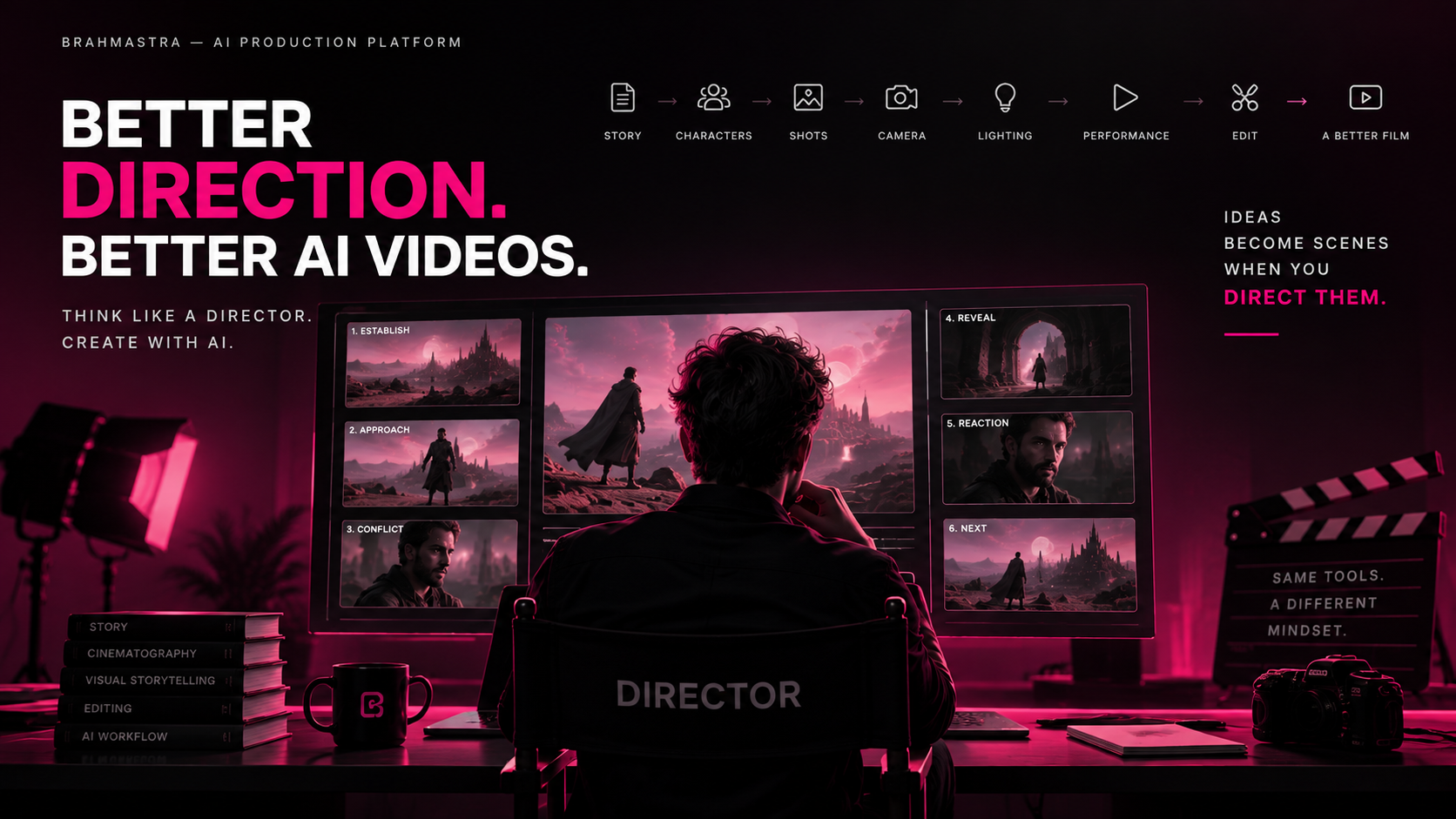
Why cinematic AI video creation is still about human creativity, filmmaking knowledge and the right workflow.
I have spent around 17 years working in production and VFX, and close to five years now experimenting with AI in filmmaking.
And there is one thing I have become more certain about as the models keep getting better:
A great AI model does not automatically give you a great film.
Today we are surrounded by incredible technology.
Every few weeks there is a new image model, a new video model, a new version, a new benchmark and another demo that makes everyone say, “This changes everything.”
And yes, the technology is getting ridiculously good.
But when I look at the actual work being created with these models, there is still a huge difference between something that has simply been generated and something that feels like it has actually been directed.
That difference is usually not the model.
It is the person behind it.
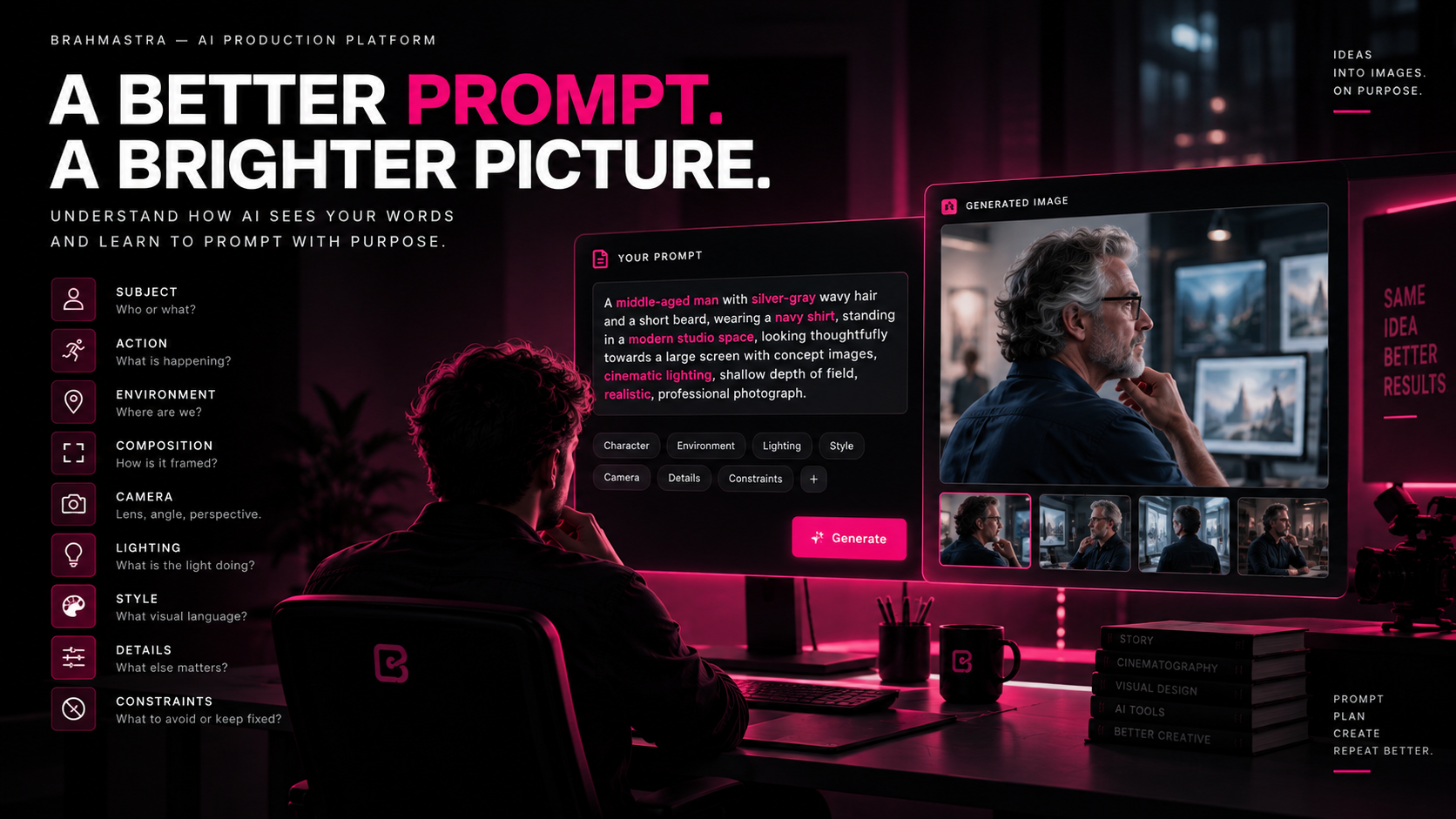
Ask for an image. You will get an image.
If you open an AI model and type:
A man sitting in a restaurant talking to a woman.
The model will probably give you something perfectly usable.
There will be a man.
There will be a woman.
There will be a restaurant.
Technically, the prompt has been fulfilled.
But is it cinema?
Probably not.
Because filmmaking has never been just about what exists inside the frame.
It is about how you decide to show it.
Where is the camera?
Are we on a 24mm lens or an 85mm lens?
Are we close to the characters or observing them from a distance?
Is the camera at eye level?
Are we looking over someone's shoulder?
Is one character slightly obscured in the foreground?
Where is the key light coming from?
Is it hard or soft?
What part of the face falls into shadow?
What is happening in the background?
How much depth does the location have?
What should the audience notice first?
What should they not notice yet?
What emotion is this particular shot supposed to create?
These decisions existed long before AI.
And they still exist after AI.
Every AI image is a reflection of the person asking for it
This is something I think people misunderstand about generative AI.
When two people use exactly the same model, they can get dramatically different results.
Why?
Because the model may be the same, but the thinking going into the model isn't.
A cinematographer may describe a shot differently from a graphic designer.
A production designer will notice different things.
A director will think about performance and story.
A VFX artist will think about how the shot needs to connect with the shots before and after it.
Someone who understands lenses knows what compression they want.
Someone who understands lighting knows why they want a source coming from one particular direction instead of simply typing “cinematic lighting.”
That knowledge gets reflected in the generation.
AI doesn't remove human creativity.
In many ways, it exposes it.
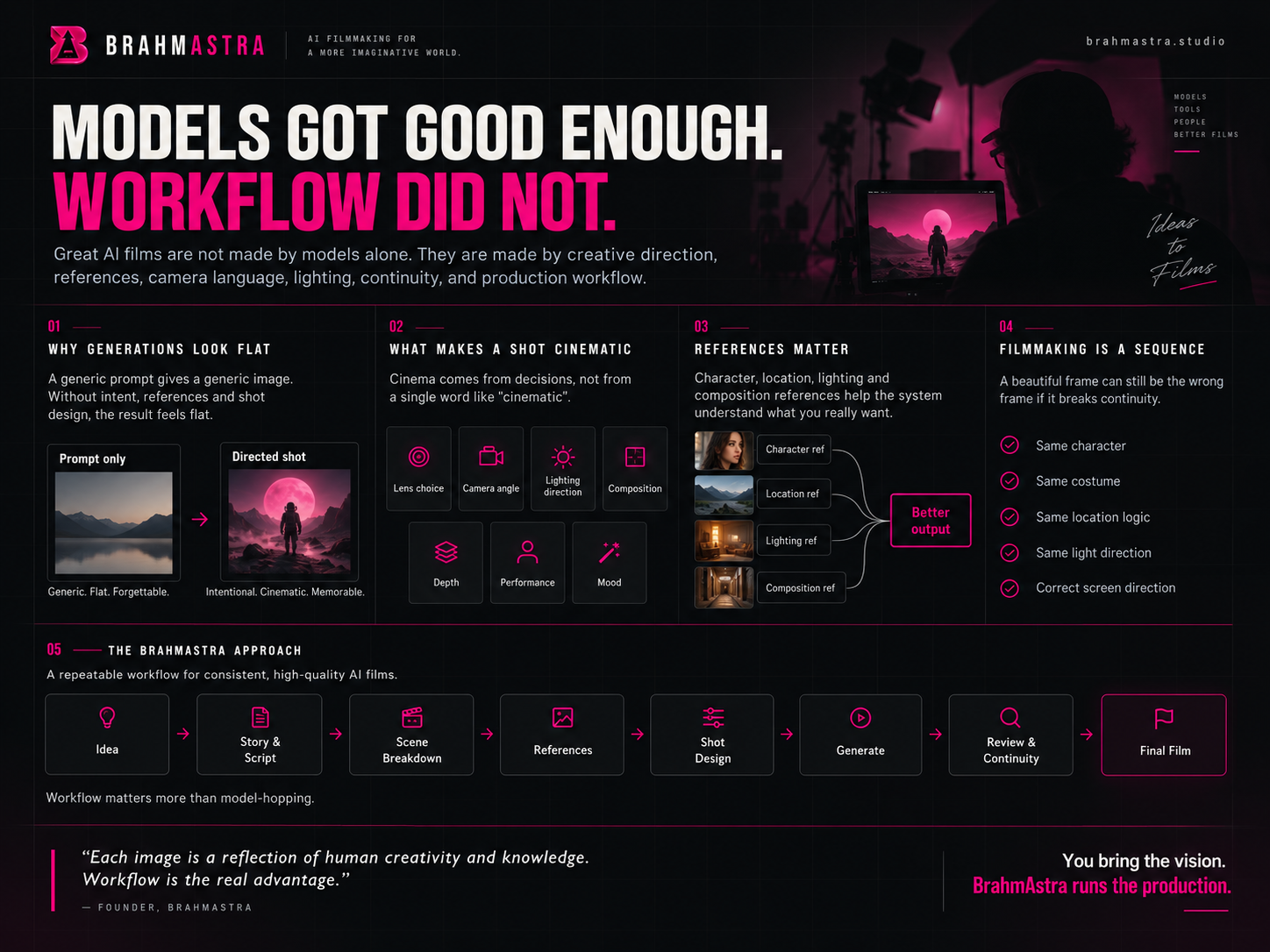
“Cinematic” is not a prompt
One of the most common words used in AI generation today is probably cinematic.
“Make it cinematic.”
But cinematic means almost nothing by itself.
A Wes Anderson frame is cinematic.
A handheld war-film shot is cinematic.
A glossy perfume commercial is cinematic.
A dark interrogation sequence is cinematic.
A huge IMAX landscape is cinematic.
They are completely different visual languages.
The important question is not:
How do I make this cinematic?
It is:
What should this particular shot communicate?
Once you understand that, everything else becomes a decision.
Lens.
Camera height.
Camera distance.
Composition.
Lighting.
Blocking.
Colour.
Depth.
Movement.
Environment.
Texture.
Performance.
And then the AI model becomes what it should be:
a production tool executing a creative decision.
Referencing matters more than people realise
Another major lesson from AI filmmaking has been the importance of references.
Humans work with references all the time.
Directors share references with cinematographers.
Production designers create mood boards.
Costume departments collect references.
VFX teams receive concept art.
Editors watch reference sequences.
Advertising agencies build decks filled with visual examples.
Why should AI production be different?
Instead of trying to explain an entire visual world using 200 words, sometimes showing the system the correct reference communicates far more.
A location reference.
A character reference.
A costume reference.
A lighting reference.
A camera-composition reference.
A previous shot.
The last frame of the previous shot.
All of these can help maintain visual intent.
And once you start creating multiple shots for a sequence, referencing becomes even more important.
Because filmmaking is not about creating twenty beautiful independent images.
It is about creating twenty images that feel like they belong to the same film.
That is a completely different problem.
A beautiful shot can still be the wrong shot
This becomes especially obvious when working on longer AI films.
You might generate an absolutely stunning frame.
Fantastic lighting.
Beautiful face.
Great composition.
Perfect detail.
And still have to throw it away.
Why?
Because the character entered from the wrong side.
The window moved.
The table changed.
The costume changed.
The person is holding something in the wrong hand.
The geography of the location no longer makes sense.
The lighting direction does not match the previous shot.
The lens language suddenly changes.
The emotional beat is wrong.
This is where AI video creation stops being a generation problem and starts becoming a production problem.
And production problems need workflows.
You don't have to memorise everything anymore
Now, there is another side to this.
If somebody reads all of this and thinks:
“Great. So now before using AI I need to study cinematography for ten years?”
No.
That is actually one of the most exciting things about where we are today.
You don't necessarily have to memorise every lens characteristic.
You don't need to remember every lighting setup.
You don't need to know the exact terminology for every camera move.
You don't have to byheart an entire filmmaking textbook before creating your first film.
AI itself can help you access that knowledge.
The system can suggest lenses.
It can help construct lighting.
It can analyse references.
It can propose shot coverage.
It can remind you about continuity.
It can help translate an emotional intention into technical filmmaking language.
That is where I think AI becomes genuinely powerful.
Not when it replaces knowledge.
But when it makes knowledge accessible at the moment you need it.
This thinking is one of the reasons we built BrahmAstra
While working with AI production, we kept running into the same problem.
There are already amazing models.
And there will always be another amazing model.
Today it may be one model.
Three months later another one might be better.
Next year the entire landscape could change again.
So building a filmmaking platform around the idea that one particular model is the product never made much sense to me.
The model is part of the pipeline.
It shouldn't be the pipeline.
What matters more is everything around it.
Understanding the story.
Breaking it into scenes.
Understanding the characters.
Maintaining their appearance.
Understanding locations.
Maintaining spatial continuity.
Planning shots.
Choosing camera language.
Using references correctly.
Choosing the appropriate generation model.
Reviewing what comes back.
Making corrections.
Passing information from one shot to another.
Keeping the director's intention alive throughout the process.
That is the layer we have been focusing on with BrahmAstra.
We have been building and training the system around production thinking—not simply around the idea of giving someone access to as many AI models as possible.
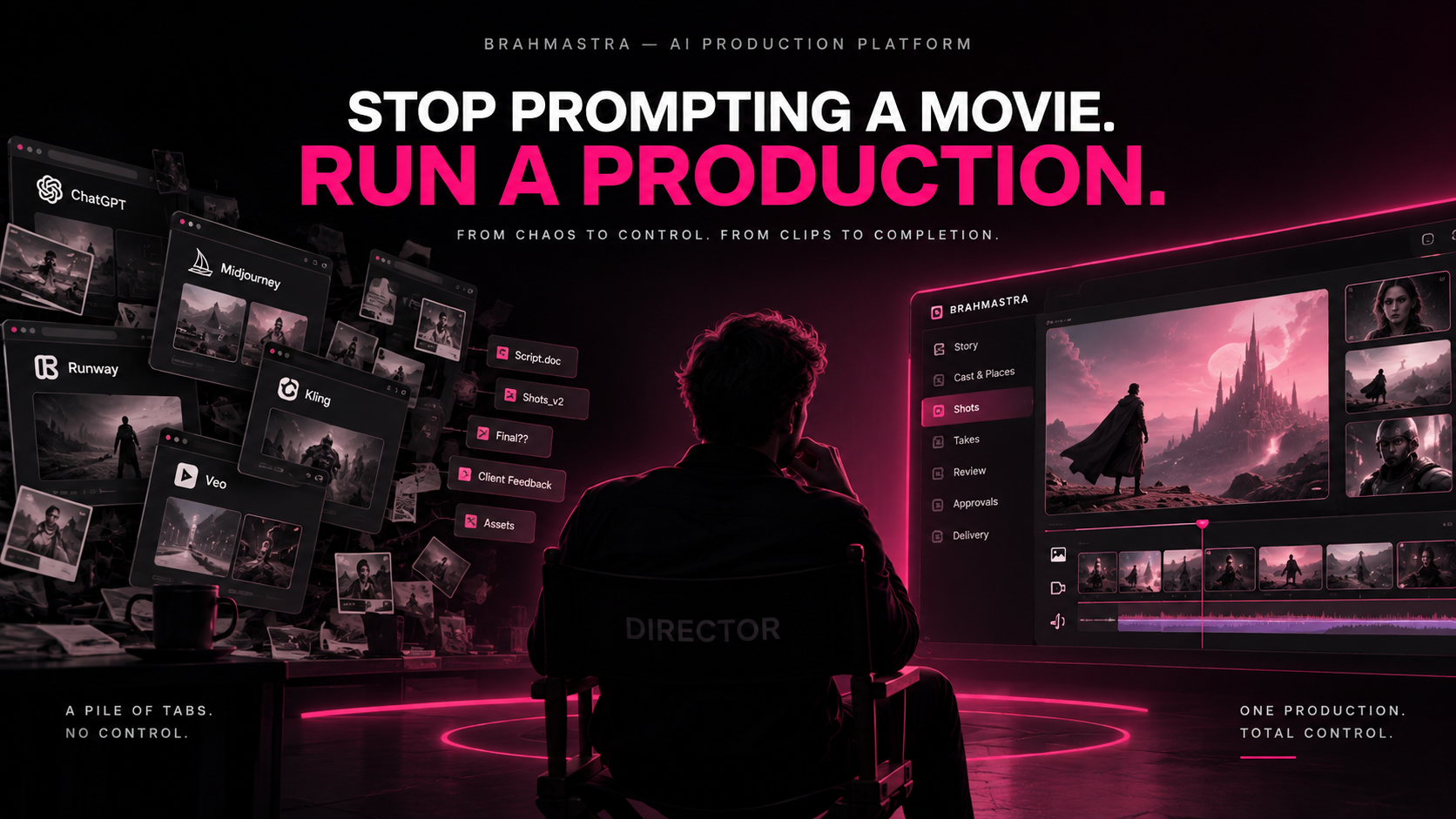
Because access to 100 models doesn't necessarily make filmmaking easier.
Sometimes it just gives you 100 different places to make the same mistake.
The best model should almost disappear into the workflow
I actually believe that, over time, creators should have to think less about model names.
A director shouldn't have to stop in the middle of a scene and think:
Should this shot go to Model A, Model B or Model C?
They should be thinking:
I want this to feel intimate.
Move closer.
Use a longer lens.
Keep her in focus and let him fall slightly soft.
The room should feel colder than the previous scene.
Don't change the window position.
Continue from the previous shot.
That is creative language.
The production system should understand the intention and help figure out what technology is best suited to execute it.
Models will keep changing.
Creative intent doesn't.
Workflow is the real advantage
For the last few years there has been a lot of focus on prompts.
Then prompt engineering.
Then models.
Then model comparisons.
I think the next stage is going to be much more about workflow engineering.
How does an idea survive all the way to the final frame?
How does information travel from screenplay to scene breakdown?
From scene breakdown to shot design?
From one generated shot to the next?
How does the character stay the same?
How does the location stay believable?
How does the filmmaker communicate corrections?
How does the system remember decisions?
How does an entire team collaborate around those decisions?
These are not glamorous problems.
They don't always make impressive ten-second demo videos.
But they are the problems you encounter the moment you try to create something longer than a demo.
And solving those problems is what turns generative AI into an actual filmmaking medium.
AI can generate pixels. Humans still create meaning.
I have seen filmmaking change enormously over the last 17 years.
Tools changed.
Cameras changed.
VFX changed.
Rendering changed.
Software changed.
And now AI is changing almost everything again.
But one thing has remained surprisingly consistent.
Technology can give filmmakers new possibilities.
It cannot decide why a shot should exist.
That still comes from us.
The taste.
The judgement.
The references we choose.
The emotion we want.
The mistakes we notice.
The details we insist on.
The decision to move the camera ten centimetres lower because somehow the frame suddenly feels right.
That is filmmaking.
AI simply gives us a new way to execute it.
So when someone asks me which AI video model they should learn, my answer today is increasingly:
Learn the workflow.
Models will change.
The craft stays.
And the creators who understand both will be the ones who make work that doesn't simply look AI-generated.
It will just look like a film.
— Founder, BrahmAstra
BrahmAstra You bring the vision. BrahmAstra runs the production. brahmastra.studio